
Finding Waxhaw Residents
There is no single official list of every Waxhaw household. The useful starting point depends on the question. A current address works best in the Union County parcel search. A name can lead to the voter lookup, a court party search, or the Register of Deeds index. A family-history question often starts with a printed directory, newspaper, or obituary held through the library. Each record answers one narrow question. It should never be stretched into an all-purpose profile.
For a Waxhaw address, record the postal form first, then compare the physical address, parcel identifier, owner name, and source date. For a Waxhaw name, retain the spelling exactly as shown and compare more than one lawful identifier before treating two entries as the same person. The county, town, and state sources are complementary. They do not all update at the same time, and each has fields that are withheld or unavailable.
- Use the Union County property search when a Waxhaw street address is known, and save the parcel ID with the record date.
- Check the North Carolina voter search when an election record is relevant, using name, birth year, county, and status.
- Move from the tax owner or legal name to the deed index, then review the instrument image, book, and page.
- For an older Waxhaw household, compare a directory year with library newspapers, maps, and the appropriate archive series.
- Ask the named custodian for a defined record and date range when the public interface does not hold the needed image.
Waxhaw Records Offices
Most resident-related records for Waxhaw are kept by Union County or North Carolina offices, not by a municipal roster. The Register of Deeds preserves land instruments and selected vital material. Tax Administration maintains the property listing and assessment side of a parcel. The Board of Elections handles voter information. Use the office that created the record, then preserve the office name and retrieval date with any result.
Records held by different offices can look similar while meaning different things. A parcel owner may be a trust, an entity, or a former owner. A voter entry speaks to registration, not title. A deed index shows parties to an instrument. For a full address-based chain, the Waxhaw street records walkthrough keeps those steps in their proper order.
Union Register of Deeds
500 North Main Street, Suite 239
Monroe, NC 28112
704-283-3843
Union Tax Administration
500 North Main Street, Suite 236
Monroe, NC 28112
704-283-3746
Union Board of Elections
316-B East Windsor Street
Monroe, NC 28112
704-283-3809
Waxhaw Parcel Records
The Union Real Property Search is the address-first route for Waxhaw parcel work. Its landing screen offers Parcel, Address, and Owner fields. A result can show the physical address, owner, market value, and parcel ID. The fuller card may also hold legal description, land and building fields, assessment changes, sales history, permits, and a map. Save the PID before following a name into deed records.
The property card is a tax record, not a survey and not a current-household roster. Tax ownership and legal title can be different, data can lag a transfer, and some owners appear as entities or trusts. Use the card to reach the correct legal name and book/page trail. The property office, GIS staff, a records request, and an in-person review remain available when the online result does not answer the question.
| Spatialest field | How it helps |
|---|---|
| Parcel | Returns to a specific tax record. |
| Address | Starts a Waxhaw street search when the PID is unknown. |
| Owner | Supplies a displayed legal name for deed-party searching. |
| Sales history | Shows document, book, page, date, grantor, and grantee leads. |
The official Union property search displays the address, parcel, and owner controls used for Waxhaw property research.
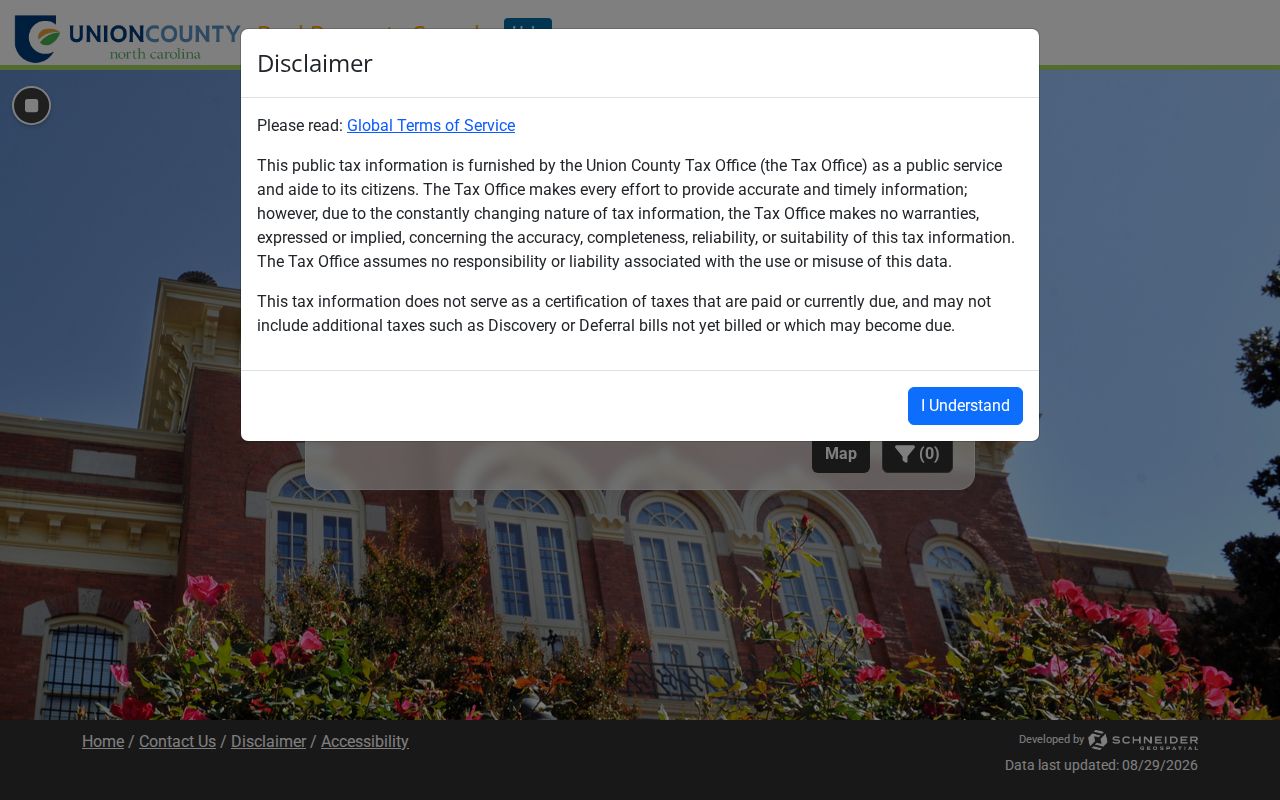
That interface locates a parcel, but the card date and recorded deed still matter for every Waxhaw conclusion.
Waxhaw Postal Boundaries
A Waxhaw mailing address does not by itself place a parcel inside Waxhaw town limits. Town Planning directs readers to check the town-limit information and map context, while Union County GIS can show the parcel and local layers. USPS delivery geography, municipal jurisdiction, county service area, and voting assignment are separate facts. Keep them in separate columns when compiling a Waxhaw address record.
The postal ZIP 28173 is the verified Waxhaw delivery marker, but it is not a town-residency test. Edge addresses should be checked through USPS, the UC Atlas ZIP and parcel layers, and town planning. That three-part check avoids a common mistake: treating the postal city as a legal boundary or treating a parcel outline as a surveyed property line.
Note: UC Atlas replaced GoMAPS in July 2025, so saved map instructions should be updated before relying on a former application link.
Waxhaw Voter Records
The North Carolina voter lookup provides a focused way to verify public election information for a Waxhaw name. The form requires first and last name, offers a middle initial, birth-year, and county filters, and requires at least one voter-status choice. A returned record can include registration status, jurisdictions, polling place, sample-ballot information when available, absentee information, and voting history. It is a registration record, not proof of ownership or an entire residence history.
For larger or more specific election records, Union Elections can handle a written information request, and state law controls the statewide-file route. Public voter data excludes full and partial Social Security numbers, dates of birth, driver-license numbers, and protected fields. A protected or confidential address must remain protected. The Union Board of Elections can be reached in person, by phone, email, or mail if the web form is not enough.
| Voter lookup field | Public search use |
|---|---|
| First and last name | Required name fields. |
| Middle initial | Optional narrowing detail. |
| Year of birth | Filter for similar names. |
| County and status | Choose Union and one listed status. |
The state voter lookup displays the name, birth-year, county, and status controls used in a Waxhaw residents directory search.
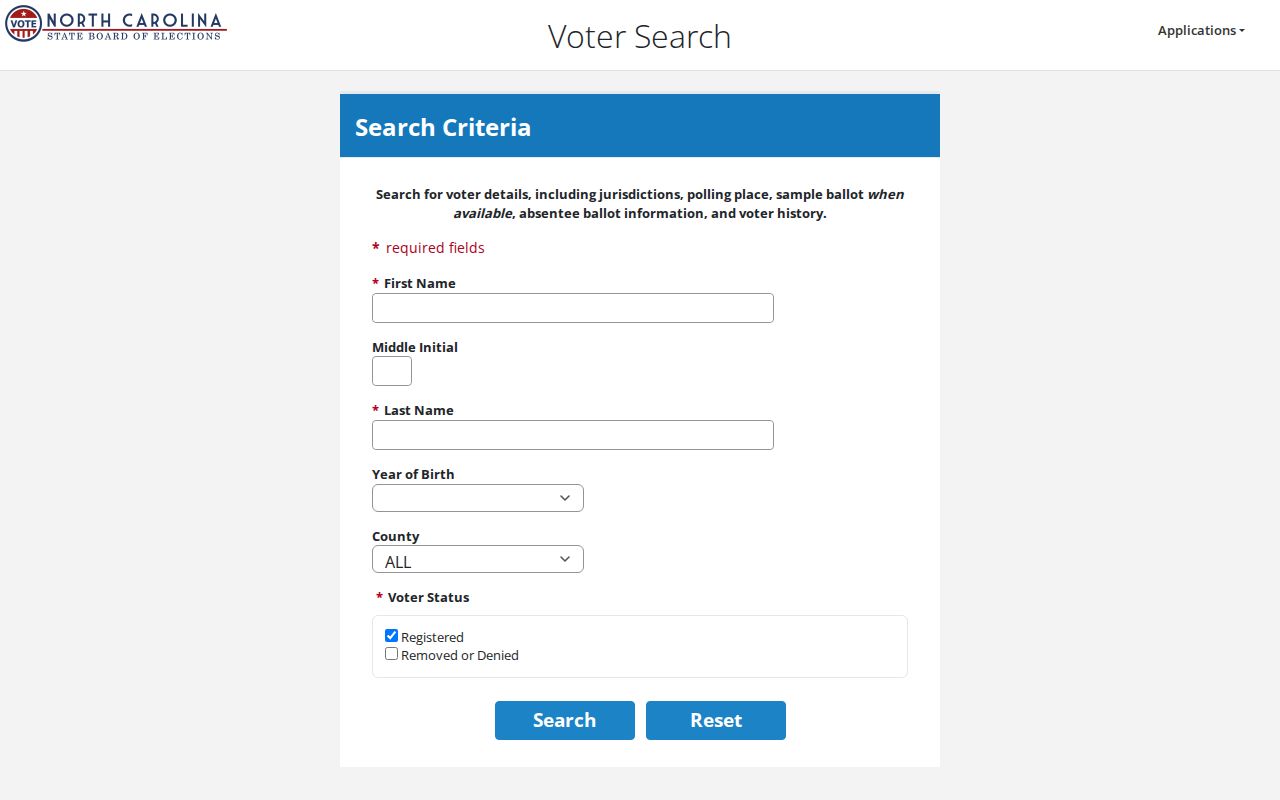
Use a voter result as one dated public record, then compare it with the custodian that holds a separate parcel, deed, or court record.
Waxhaw Deed Trail
Union County keeps deeds and plats through the Register of Deeds, but the online deed route is name-based rather than address-based. That split is important. Start with the parcel card or GIS record, write down the owner or legal name, then search the grantor and grantee index. The instrument details, book, page, date, document number, and image provide the chain that an address field alone cannot supply.
The county says the online land route covers deeds and plats, not mortgage information. Liens and judgments belong with the Clerk of Superior Court. Covenants and CCRs may require an office search. Online access is one channel, not the only one: the ROD counter, phone, mail route, public-record request, library historical material, and State Archives can each matter when a record is older, unclear, or outside the available index.
- Parcel
- A tax and mapping identifier used to locate a property card and map context.
- Grantor
- The party transferring an interest in a recorded instrument.
- Grantee
- The party receiving an interest shown in that instrument.
- Plat
- A recorded map that can identify lots, roads, or easements.
Current Waxhaw Resident Records
A current Waxhaw residents directory is really a set of official indexes with different coverage. The parcel roll identifies tax owners and property details. The voter route covers registered voters subject to its rules. Deed indexes identify instrument parties. Public civic rosters can confirm a published role and date. None of these sources establishes every household member or turns an address into a complete personal profile.
Keep the boundaries visible. A property card describes tax data. A voter result reflects registration. A board roster speaks to a public role. Information can be changed, corrected, or withheld under a specific law. A record with the same Waxhaw name should be checked against date, place, party role, and another official source before it is treated as a match.
| Waxhaw record source | What it can confirm | Custodian | Access route |
|---|---|---|---|
| Property card | Tax owner, parcel, physical address, assessment details | Union Tax Administration | Portal, counter, phone, request |
| Voter record | Public registration and jurisdiction fields | State and Union Elections | Lookup, office, written request |
| Deed index | Grantor, grantee, instrument, book, page, date | Union Register of Deeds | Name index, counter, mail, request |
| Public board material | Published civic role or meeting context | Town of Waxhaw | Town records and public materials |
Waxhaw Permit History
Permit records can add a dated address-history lead, but a permit is not a resident directory entry. Waxhaw’s public permit portal allows searches by permit number, address, or date without login. It can show published permit and inspection information. The Town’s Building Inspections and Code Enforcement counter, phone, email, and mailed permit route are alternatives when an online entry needs clarification or a defined public-record request.
County building records use a separate public interface, and the correct route depends on jurisdiction. A Waxhaw mailing label may fall outside town limits, so compare Planning or town-limit information before choosing a town portal. A permit applicant, contractor, or property owner should not be assumed to live at the project address. Record the permit number, date, type, status, and agency instead.
Waxhaw Court Records
North Carolina eCourts provides public case summaries and judgment searching for Union County matters, with protected and sealed exceptions. Search broad name variants first, then compare party role, case number, location, filing date, events, and exact disposition. A docket hit is procedural information. It does not prove an identity from a name alone, and an arrest or filing is not a final outcome. Courthouse public terminals, the Clerk, records requests, mail, and Remote Public Access are separate channels.
Union County went live with eCourts in October 2024. Older files may still need the Clerk or courthouse route. The public search accepts party name, case number, date of birth, and advanced filters, while a certified county criminal record check uses the Clerk and AOC-CR-314 with its published $25 fee. Preserve the case number, county, date retrieved, and status rather than summarizing an old entry as a present condition.
Waxhaw Vital Channels
Vital records have a different access path from a name lookup. North Carolina Vital Records states statewide coverage periods for births, deaths, marriages, divorces, and fetal deaths. Union ROD and the Clerk handle certain local routes, while older material can belong with the State Archives. Certified copies have eligibility rules under G.S. 130A-93. Request information is specific to the record type, event date, place, and relationship of the requester.
NC Vital Records lists a $24 search fee that includes one copy for each three-year period or part of a period, subject to its published conditions. The search fee is nonrefundable. In-person, mail, state order, county, archive, and library obituary channels each serve different needs. A certificate office is not a free public name-search database, and restricted adoption, medical, parent address, and Social Security details remain outside a general Waxhaw search.
The North Carolina vital-record order route sets out the certificate request choices and required information for a Waxhaw or Union County event.
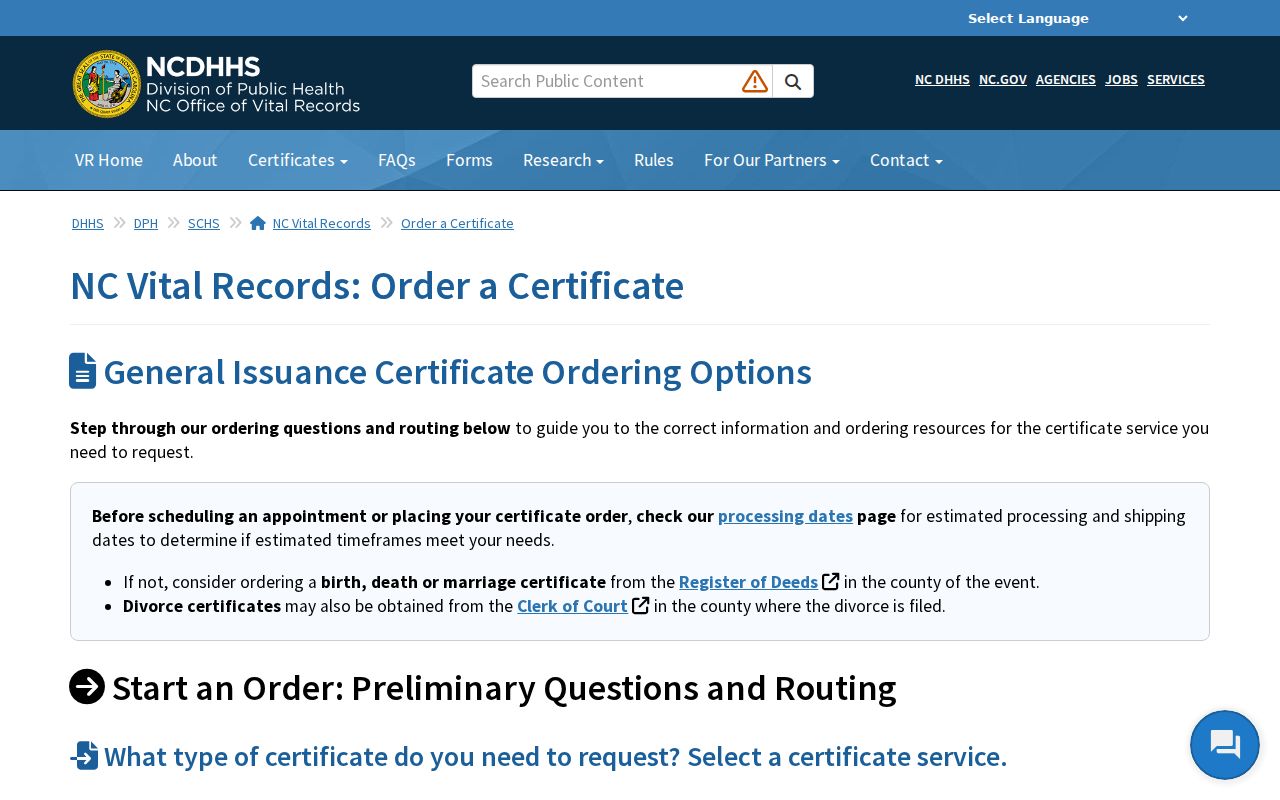
The official order process is the appropriate fallback when a historical lead needs certificate-level confirmation and the requester meets the stated eligibility rules.
Historical Waxhaw Directories
Historical directories fill a gap that modern portals cannot. The verified Monroe and Union County volumes on DigitalNC include 1922–23, 1942–43, 1951–52, 1955–56, 1958–59, and 1962–63. They are not a continuous, standalone Waxhaw run. Rural and street coverage must be checked in the actual volume. Names, street entries, spouse notation, household clues, and business references are useful leads when paired with a year and page image.
Union County Library’s Dickerson Genealogy and Local History Room adds newspapers, Sanborn maps, photographs, obituary help, and library-based databases. The Museum of the Waxhaws and the State Archives add historical context and older county series. A focused Waxhaw city directory collections search explains how to read those volumes without treating OCR text or a symbol as proof of a relationship.
Note: In the 1958–59 criss-cross material, a Waxhaw Road continuation note is historic street context, not a current town-boundary finding.
Waxhaw Recordkeeping Timeline
Waxhaw was chartered in 1889, while Union County formed in 1842. That order explains why a household, tract, or name may appear in county records before it is described with a modern Waxhaw municipal label. The Museum’s account of the Trader’s Path and the area’s settlement history can give a street or surname context, but it cannot establish family relationships or present residence.
Later records arrive in layers. Statewide birth registration begins in 1913, selected directory volumes span the twentieth century, Union ROD reports online deeds from 1973 and maps from 1842, and Tax Administration’s permanent real-estate listing begins in 1987. A 1950s directory, a current parcel card, and a recorded deed are all useful, but only for their own date and purpose.
| Period | Waxhaw and Union research meaning |
|---|---|
| 1842 | County records begin before Waxhaw’s municipal charter. |
| 1889 | The charter is a historic marker, not a modern-boundary rule. |
| 1910s–1960s | Directories and criss-cross material offer dated street leads. |
| 1973 onward | The online deed route begins in 1973; other channels may hold older records. |
Waxhaw Records Requests
When a public record is not online, a concise request reaches the right custodian faster. Identify the agency, record series, date range, person, parcel, or case number, preferred format, and whether inspection or copies are wanted. North Carolina’s Public Records Act, G.S. Chapter 132, permits inspection and copies at reasonable times, but it does not require an agency to create a new record. Ask for a fee estimate before a request that may need extensive work.
G.S. 132-6.2 addresses available formats, written database requests, actual copy cost, and possible special service charges for substantial work. There is no universal statewide response-day count. A custodian can withhold fields under a specific confidentiality law. If a record is unavailable, ask which office holds it, whether a different index or image exists, and what statutory basis applies to a withholding.
The North Carolina court public-record request service illustrates the official request route for court-held material in a Waxhaw search.
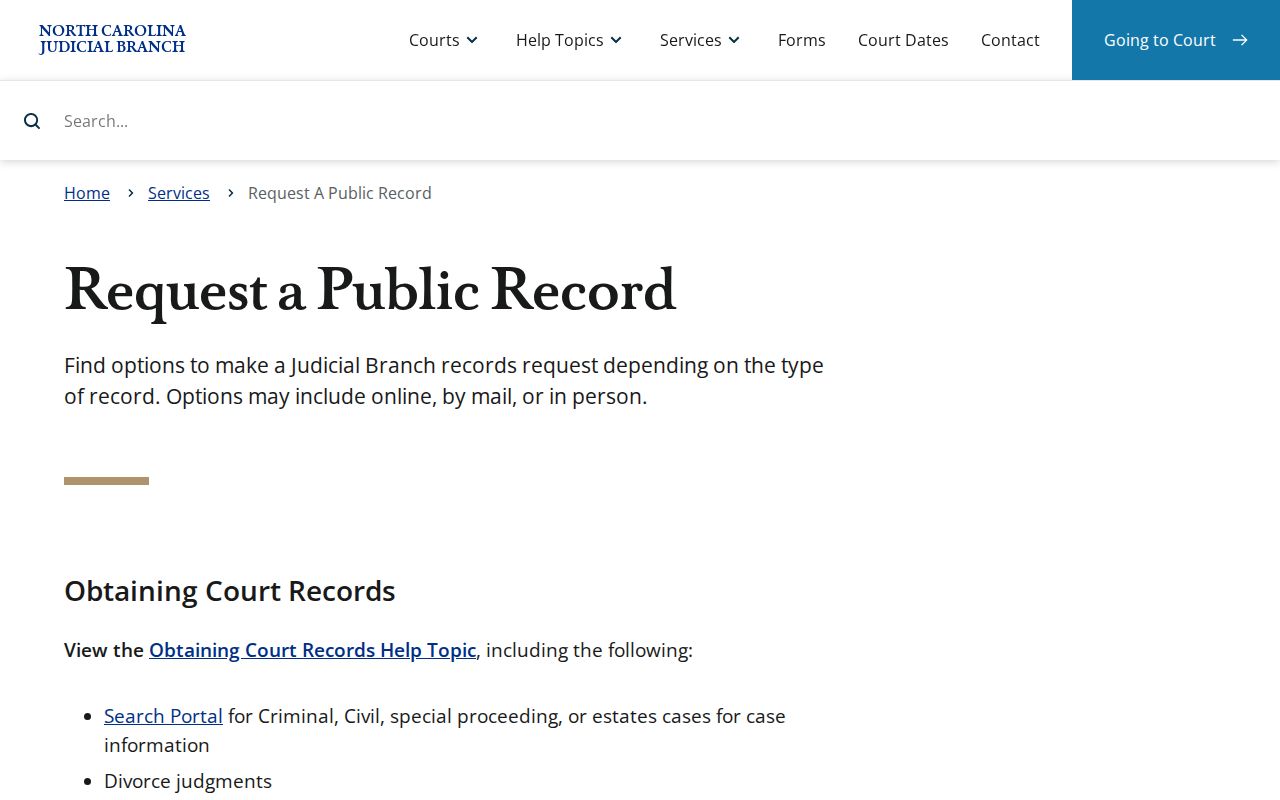
A clear request for a case number, instrument, or date-bounded record is more useful than asking an office to create a new Waxhaw resident list.
Waxhaw Privacy Limits
Public does not mean unrestricted. North Carolina’s Address Confidentiality Program protects qualifying survivors through a substitute address, and public voter data excludes several sensitive identifiers. Court files can be sealed, vital material has access limits, and a public map or parcel card should never be used to expose a protected address. Use the agency that holds the record when an address needs correction or confidentiality review.
Official records are generally more useful than anonymous commercial lists because they show a custodian, a record type, and a date. They are also narrower. A parcel card is not a household list, and a historical directory is not a current address claim. Keep the source limits visible instead of combining unrelated entries into a single account of a Waxhaw resident.